
Automotive maintenance tools set of 9 practical pieces including air pump wedge and door opening aids for car emergencies with high-strength materials in plastic and metal construction


Automotive maintenance tools set of 9 practical pieces including air pump wedge and door opening aids for car emergencies with high-strength materials in plastic and metal construction
9-Piece Automotive Emergency Tool Set with High-Strength Air Pump Wedge for Lockout Situations

Vehicle lockouts represent one of the most common roadside emergencies drivers face, often requiring specialised tools to safely regain access without causing expensive bodywork damage. This 9-piece automotive maintenance set addresses this practical problem directly through its coordinated tool system designed specifically for creating door gaps and manipulating internal locking mechanisms. The centrepiece of the collection is the high-strength air pump wedge, engineered to withstand considerable pressure while maintaining an airtight seal that protects both vehicle and user. Rather than relying on improvised solutions that risk paint scratches or window damage, this professionally-oriented toolkit provides measured, controlled access methods suitable for both professional roadside assistance technicians and prepared vehicle owners facing unexpected lockouts.
Features and Construction
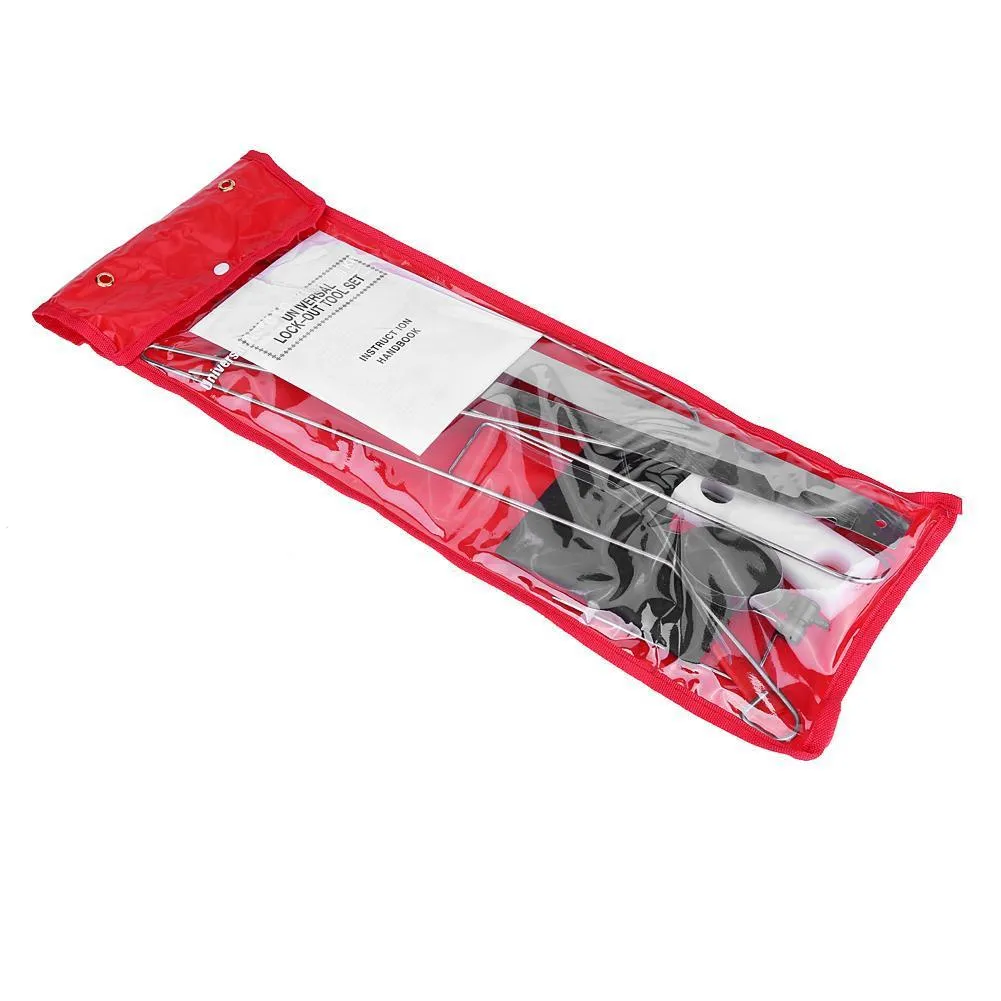
Each component in this automotive toolset serves a distinct mechanical purpose within the door access process, beginning with initial gap creation and progressing through to internal mechanism manipulation. The tools work sequentially to minimise force application while maximising effectiveness, reducing the risk of permanent vehicle damage that often accompanies improvised lockout solutions. Construction varies appropriately between tools, with hard plastic components for initial contact points and metal implements for subsequent mechanical tasks, all designed around the specific physics of modern vehicle door assemblies.
Material and Build
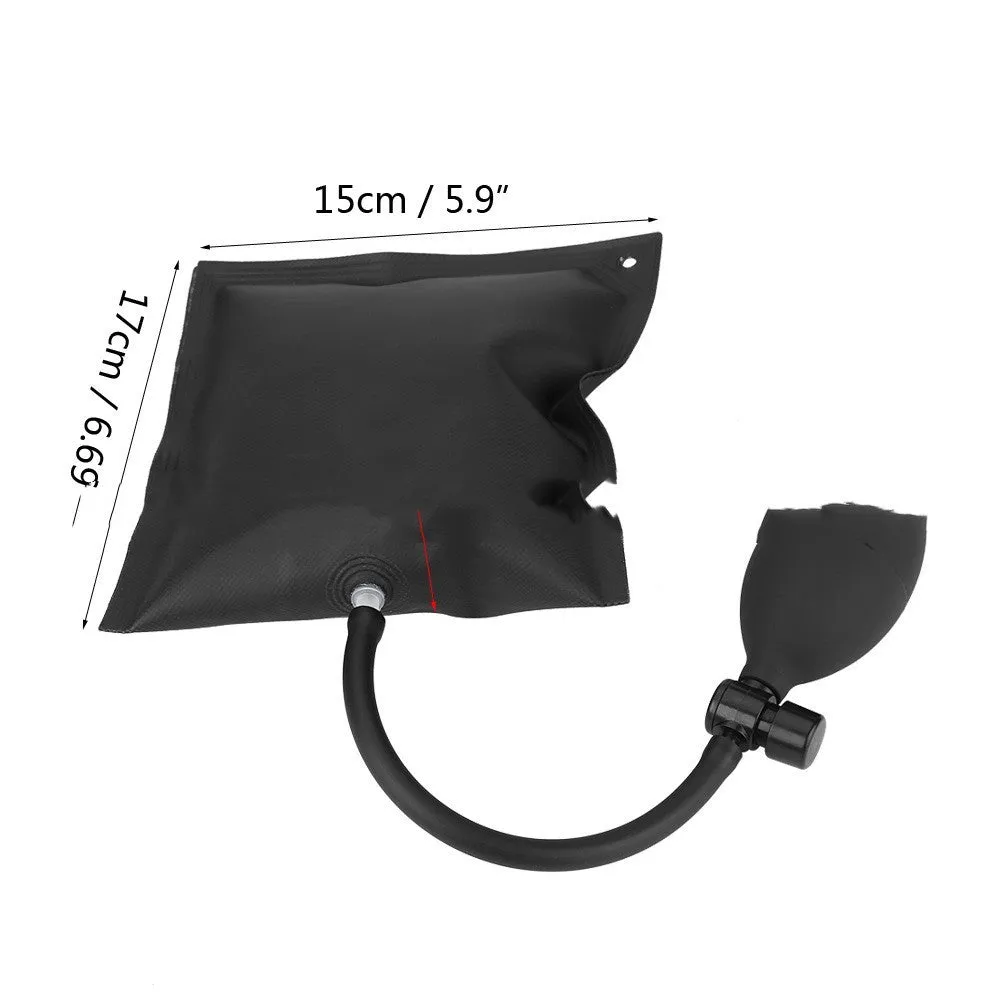
The air pump wedge represents the most technically sophisticated element, constructed from unspecified high-strength materials that maintain integrity under pressure loads up to 200 kg. Its internal flexible board creates the airtight seal necessary for controlled gap expansion without sudden pressure loss that could allow doors to snap back shut. Adjacent tools utilise more conventional materials: the black wedge employs hard plastic construction suitable for creating initial separation between door and frame, while various hooks and crowbars incorporate metal components for strength where plastic would deform. This material differentiation ensures each tool performs optimally within its specific functional range without over-engineering simpler components or under-specifying critical pressure-bearing elements.
Size and Practical Fit
Dimension specifications focus on the air pump wedge, which measures 170 × 150 × 13 mm – a compact profile designed to fit between door and frame without requiring excessive initial separation. This practical size allows the wedge to initiate the access process even on tightly sealed modern vehicles, while remaining manageable for storage in glove compartments or emergency kits. Other tools maintain proportionally appropriate dimensions relative to their functions, with crowbars and hooks sized to reach internal locking mechanisms once sufficient gap exists. The complete set's organised sizing enables systematic progression from initial gap creation through to final door release, with each tool dimensioned to work within the space created by previous steps rather than requiring simultaneous multiple-point access.
Uses and Placement
Beyond immediate lockout emergencies, this toolset supports various automotive maintenance scenarios where controlled access or separation of components proves necessary. The coordinated approach teaches systematic problem-solving applicable to multiple vehicle access challenges, from retrieving fallen items between seats to addressing child lock malfunctions. Professional users will appreciate the repeatable methodology that reduces guesswork during stressful roadside situations, while occasional users benefit from the clear progression that minimises trial-and-error attempts likely to cause collateral damage.
Event or Professional Use
For professional roadside assistance technicians or garage mechanics, this toolkit offers a standardised approach to vehicle access that reduces liability concerns through controlled, measured methodology. The high-strength air pump wedge's 200 kg pressure rating provides a safety margin for even stubborn modern door seals, while the hard plastic wedges protect paintwork during initial penetration attempts. The included crowbars and hooks address various locking mechanism designs without requiring multiple specialised kits, creating efficiency benefits during time-sensitive recovery operations. Professional environments benefit particularly from the tools' sequential design, which establishes clear escalation pathways from least-invasive to more forceful methods while maintaining damage limitation as the priority throughout.
Everyday Home Use
Vehicle owners keeping this set for personal emergencies benefit from its comprehensive approach that eliminates the need for improvisation during stressful lockout situations. The included cable tie and multiple hook designs address various internal latch configurations found across different vehicle makes and models, while the two white plastic wedges allow multiple attempt points without tool contamination from previous efforts. Home users particularly appreciate the complete nature of the 9-piece collection, which provides solutions for most common lockout scenarios without requiring additional household items that might damage vehicles. Storing the compact set in a designated vehicle emergency kit ensures immediate availability when needed, with the description sheet offering quick reference during high-stress moments.
Benefits and Buying Value

The primary value proposition centres on preventing costly bodywork repairs that often result from improvised lockout solutions, potentially saving hundreds in autobody expenses through controlled, appropriate tool use. This preventative benefit extends beyond immediate financial calculations to include reduced stress during emergencies, as having purpose-designed tools eliminates the uncertainty and potential damage of makeshift approaches. The toolkit's systematic methodology also provides educational value, teaching users about vehicle door construction and safe access techniques applicable beyond immediate lockout scenarios to various automotive maintenance situations.
Reuse and Low Maintenance
All components maintain reusability across multiple incidents, with the high-strength materials in the air pump wedge and hard plastic in the wedges resisting degradation through repeated use. Simple wipe-down cleaning between uses maintains hygiene and functionality without specialised care routines, while compact storage requirements ensure the set remains readily available rather than becoming misplaced. The tools' material choices prioritise longevity over disposable convenience, with metal components in hooks and crowbars offering essentially unlimited reuse potential when stored properly. This reusability transforms the set from single-incident solution to ongoing automotive emergency resource, spreading its value across potential future needs rather than exhausting it during initial use.
Why Choose This Product
This automotive toolset distinguishes itself through its complete systematic approach to vehicle access challenges, combining gap creation tools with mechanism manipulators in one coordinated package. The air pump wedge's specific 200 kg pressure rating provides measurable performance data absent from many generic alternatives, while the hard plastic wedges offer paint-protecting entry points missing from metal-only solutions. For buyers comparing automotive emergency options, this 9-piece collection offers substantiated technical specifications rather than vague quality claims, with clearly stated dimensions and material descriptions supporting informed purchasing decisions. The inclusion of both plastic and metal components across various tools demonstrates thoughtful design for different functional requirements within the access process, avoiding material compromises that could limit effectiveness in specific scenarios.
