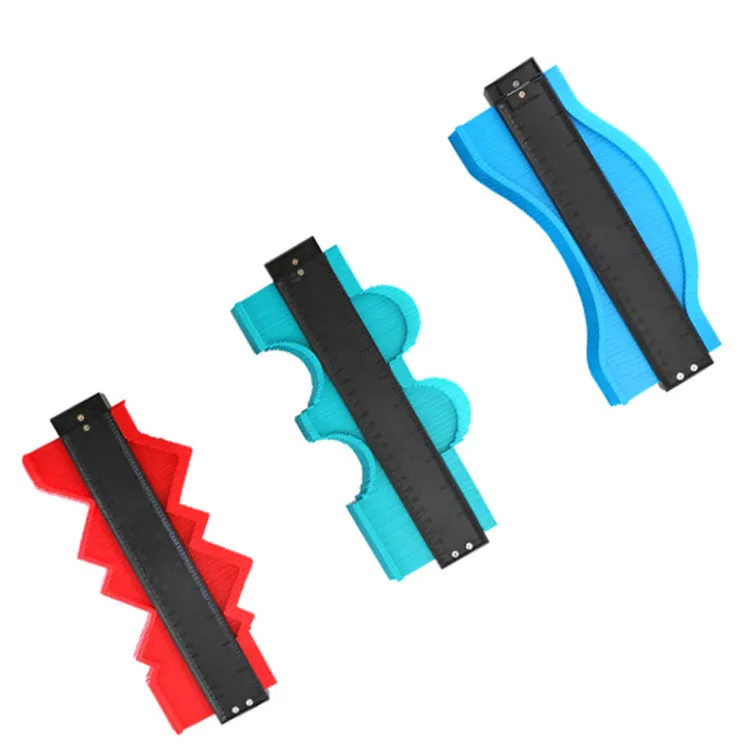
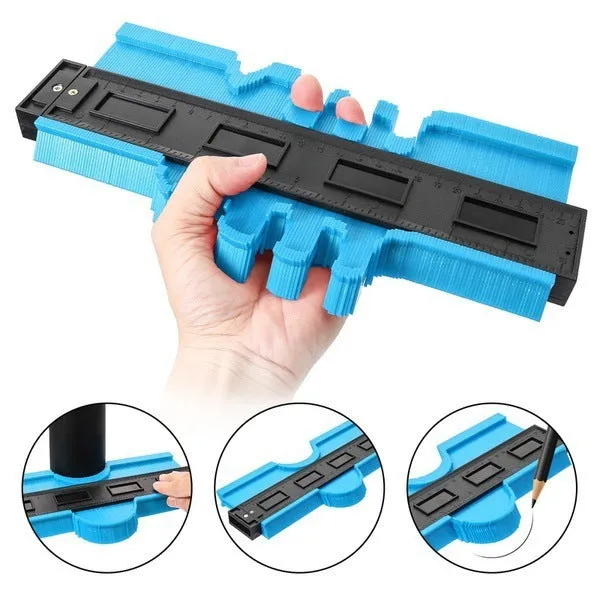
Contour Gauge Profile Gauge Carpentry Measurement Tool 12cm 25cm ABS Multifunctional Woodworking Marking Gauge for Flooring Tile Laminate Cutting Blue Green Red


Contour Gauge Profile Gauge Carpentry Measurement Tool 12cm 25cm ABS Multifunctional Woodworking Marking Gauge for Flooring Tile Laminate Cutting Blue Green Red
Contour Gauge Profile Gauge 12cm 25cm ABS for Carpentry and Woodworking
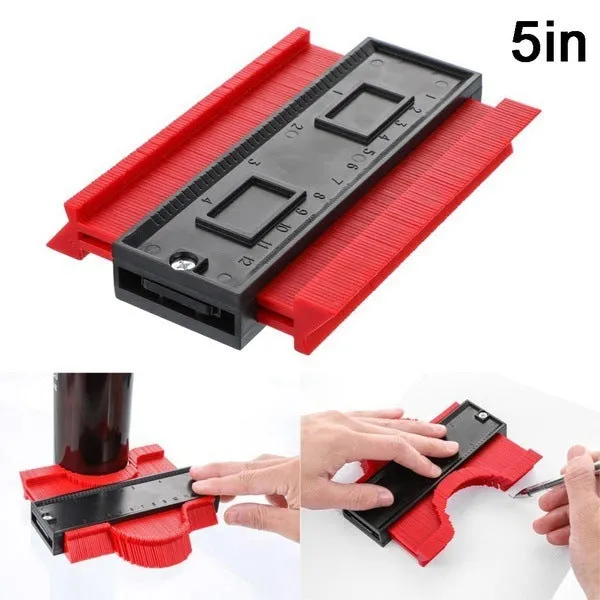
A contour gauge is a marking and measuring tool used to copy irregular shapes so they can be transferred to another surface for cutting, fitting or shaping. This profile gauge is intended for carpentry, woodworking, flooring, tile laying and laminate work, where straight rules and tapes cannot follow an uneven edge. It is available in 12 cm and 25 cm sizes, with body dimensions of 146 x 105 x 21 mm and 275 x 105 x 21 mm respectively. The gauge is made from ABS and comes in blue, green or red. It uses a pin-based action to trace profiles around pipes, door frames, skirting, floor edges and similar shapes. The information here is limited to size, material, colour and general use, so no performance ratings or specialist certifications are claimed.
Features and Construction
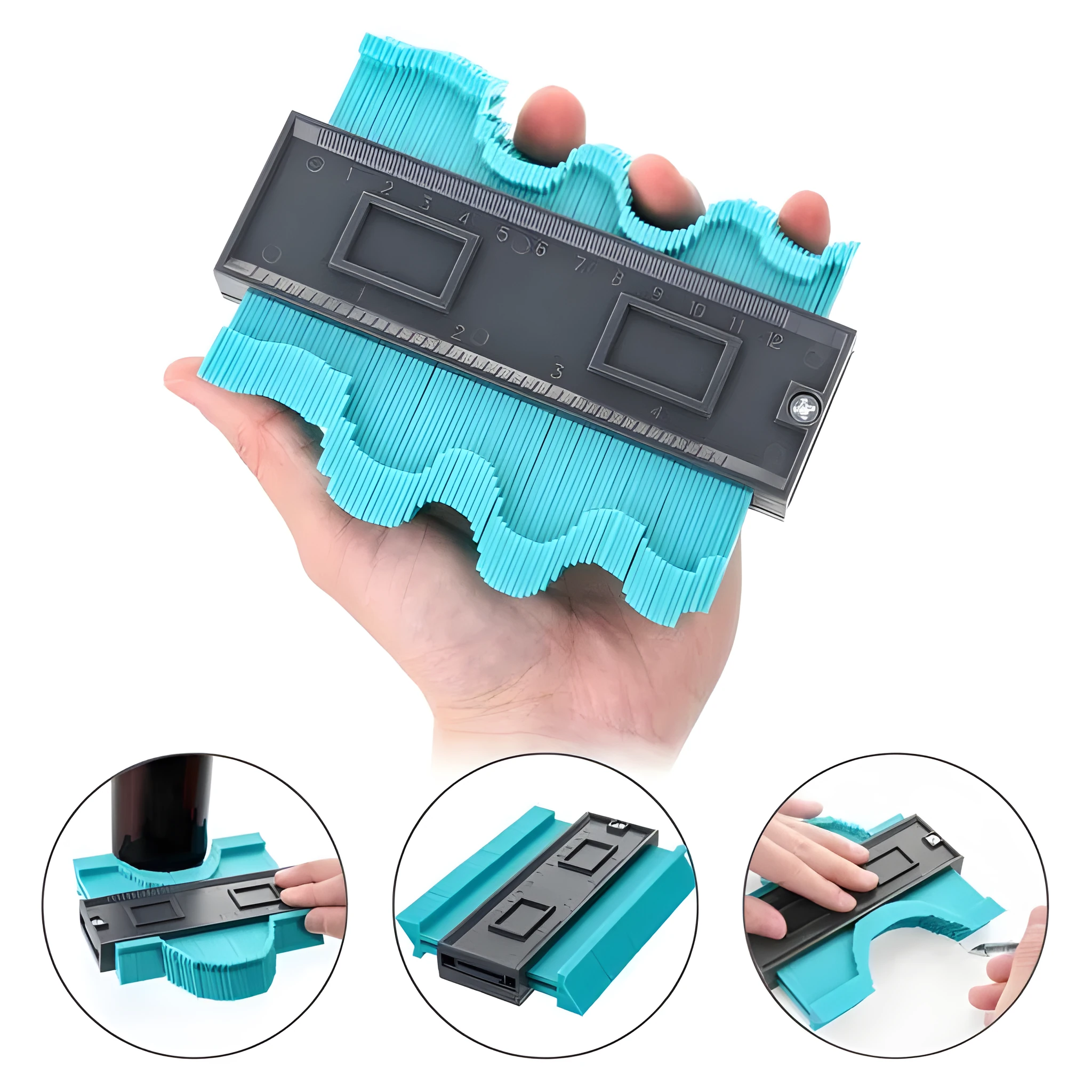
The gauge is built around a pin array that moves to follow a contoured surface. Once the pins have taken the shape, the profile can be used as a reference for cutting or marking. ABS is a moulded plastic material suited to a lightweight marking tool of this type. The available data covers size, material and colour only.
Material and Build
The profile gauge is made from ABS. This material forms the body and the pin housing. It is a common thermoplastic used in measuring and marking tools where a lightweight, moulded shape is required. No additional coatings, metal components or reinforcement details are stated. The gauge is not described as waterproof, impact-rated or suitable for structural loading. It should be used as a marking aid rather than as a clamp, spacer or support. Keeping the pins free from grit and debris will help maintain smooth movement during use.
Size and Practical Fit
Two sizes are offered. The 12 cm option measures 146 x 105 x 21 mm. The 25 cm option measures 275 x 105 x 21 mm. The larger size gives a wider copying area for longer or broader profiles, while the smaller size is easier to position in tighter spaces. Both share the same 105 mm width and 21 mm depth, so the main difference is overall length. No other measurements, such as pin depth range or maximum contour angle, are provided in the source data.
Uses and Placement
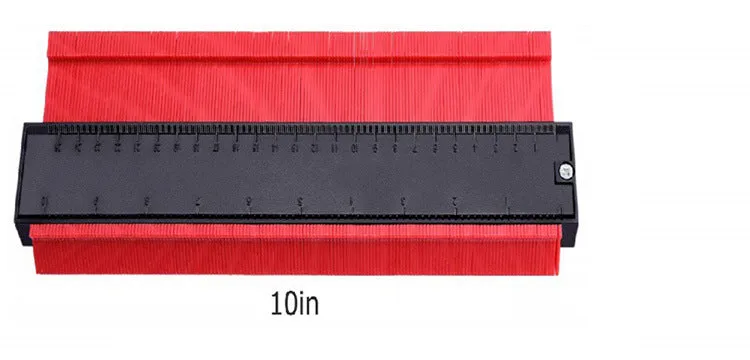
This tool is aimed at tasks where a shape must be copied before cutting. It can be used in carpentry and general woodworking, and it is also relevant to flooring, tile and laminate installation. The pin gauge follows the contour of the surface it is pressed against, allowing the user to mark that shape onto the material being fitted.
Event or Professional Use
For trade and workshop use, the contour gauge supports marking around pipes, mouldings, frames and irregular wall or floor edges. In flooring and laminate work, it can help transfer the outline of a door frame or pipe to a plank before cutting. For tile laying, it can be used to mark cuts around obstacles where a straight edge will not follow the shape. The ABS body keeps the tool light enough to hold against vertical and overhead surfaces, though no weight figure is stated. The gauge is a manual marking aid and does not replace a laser measure, spirit level or cutting tool.
Everyday Home Use
For home projects, the profile gauge can be used when fitting shelves, skirting, beading or floor coverings around awkward shapes. The 12 cm size is convenient for smaller openings and short profile runs, while the 25 cm size covers wider or longer contours in one placement. It is also useful for craft and DIY marking where a shape needs to be copied onto wood, board or tile. Because only size, material and colour data are given, no claims are made about suitability for outdoor use, wet areas or high-temperature surfaces.
Benefits and Buying Value
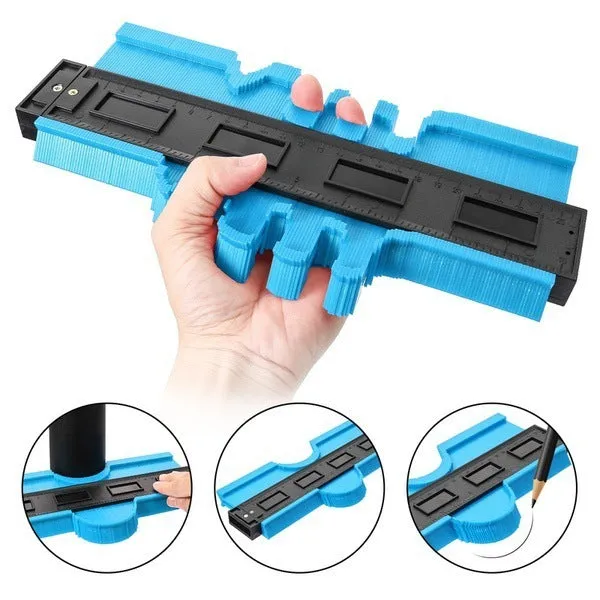
The practical value of a contour gauge lies in reducing guesswork when marking irregular shapes. By copying the profile directly, it can help avoid repeated trimming and test fitting. The ABS construction and simple pin design mean there are no batteries, cables or calibration steps mentioned in the source data.
Reuse and Low Maintenance
The gauge can be reused across multiple marking tasks. After use, the pins can be returned to a flat position and the body wiped clean. A dry or slightly damp cloth is sufficient for general cleaning. Abrasive cleaners, solvents and excessive heat are not recommended because they may affect the ABS body or pin movement. No service intervals, replacement parts or warranty details are provided in the source text. Storing the tool flat will help prevent accidental bending of the pin array during transport.
Why Choose This Product
This contour gauge is available in two practical sizes and three colours, with ABS construction and a pin-based copying action. The 12 cm and 25 cm options cover a range of marking tasks in carpentry, woodworking, flooring, tile and laminate work. The stated dimensions allow buyers to check whether the tool will fit the area they need to measure. It is a straightforward marking aid for users who need to transfer irregular profiles without introducing unsupported performance claims. The source information is limited to size, material, colour and general use, so the product is presented on those concrete details alone.